Your Pipeline Isn't Broken. Your Operating System Is.
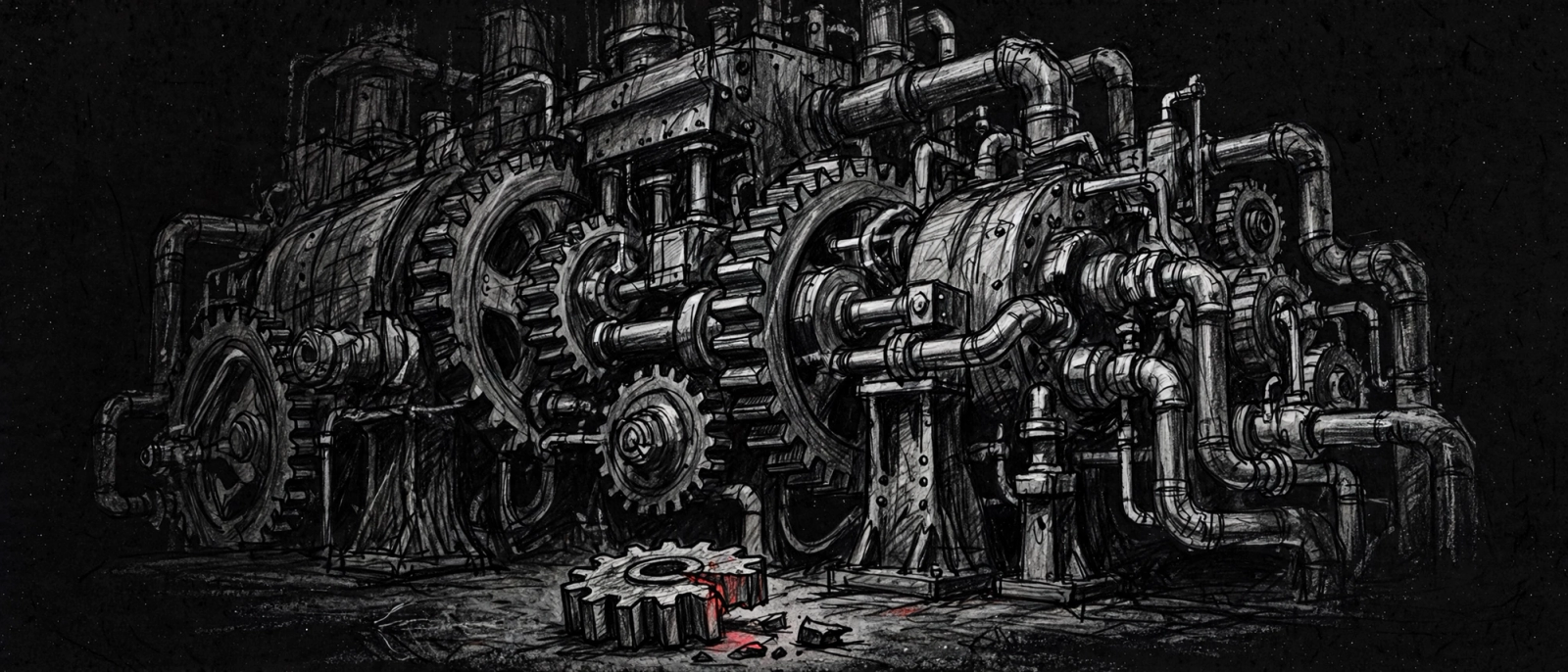
Every founder I talk to says the same thing.
"Our pipeline's broken."
Then they list the symptoms. Conversion's down. CAC's up. The paid campaigns "stopped working." The SDR team "isn't hitting numbers." The website "needs a refresh."
So they do what everyone does. They fire the agency. They hire a new head of demand gen. They rebrand. They test new creative. They throw money at a different channel.
Six months later they're sitting in the same room, saying the same sentence. Pipeline's broken.
Here's the thing I tell them, every time:
Your pipeline isn't broken. Your operating system is.
---
I've been through four exits. Not as an advisor. As the guy in the room when the numbers stopped adding up and someone had to figure out why.
One of them I remember clearly. Series B company, healthy funding, good product, smart people. By the time I walked in, they'd burned $400K across three agencies, two SDR vendors, and one rebrand in eighteen months. Every vendor had a plausible story. None of them moved closed-won revenue.
The problem was never the tactics. Nobody could answer three questions the same way: who are we selling to, what counts as qualified, who decides when something isn't working?
Marketing was scoring MQLs the SDR team refused to call. The SDR team was booking meetings the AEs refused to work. The AEs were discounting to hit quota while the board was told "demand is strong." That's not a pipeline problem. That's a company running on vibes and vendor invoices.
I killed two agencies, one SDR contract, and the "content engine" in my first month. The founder looked physically ill. Six months later their CAC was down 40% and their close rate was up — on fewer leads, because the leads were finally the right ones. Nothing we did was clever. We built the system first and let the tactics serve it.
---
Here's where the operating system breaks, over and over:
The MQL/SDR handoff gap. Marketing celebrates lead volume. Sales ignores most of it. Neither side is lying — they're measuring different things against different definitions. I've watched companies spend five figures a month generating leads their SDRs knew were garbage on sight. The fix isn't better leads. It's one shared definition of "qualified," agreed in a room, with both sides' names on it.
The attribution argument. Nobody can agree which channel gets credit, so nobody trusts the data. Stop attributing to channels and start attributing to decisions. Which bet produced this dollar? That question ends the argument because it points at judgment, not tooling.
The rebrand reflex. The logo isn't your problem. I've seen companies spend $80K on a rebrand when their positioning sentence couldn't survive a 30-second read. If you can't explain who it's for and why they should care in one sentence, you don't need a new logo. You need a new sentence.
The head-of-demand-gen hire. A company with no ICP, no qualification criteria, and no feedback loop hires a senior demand gen leader to "fix the funnel." That's like hiring a drummer for a band with no songs. They last nine months and leave frustrated. What doesn't work here is the vacuum.
---
A tactic is: "Let's run LinkedIn ads."
An operating system is: "Here's how we define the problem, find the buyer, move them through, and measure whether any of it worked — and here's who decides when we change course."
Most companies are running dozens of tactics on top of nothing. It's like a band where everyone learned their parts separately and never rehearsed together. You don't have a music problem. You have a band problem.
---
I call the thing I install SPIIX. It's the operating system I wish someone had handed me twenty years ago. It has layers, and every layer answers a question most companies leave to chance:
Thesis. What do you actually believe about your market? Not your mission statement — your bet. A real thesis sounds like this: "Mid-market ops leaders are drowning in dashboards they don't trust, and they'll pay for the one tool that tells them what to do on Monday morning." It names the buyer, the pain, and the willingness to pay — if it could apply to twelve competitors, it's wallpaper.
Operating system layers. Who decides, how fast, what matters. Who can kill a campaign, who owns the definition of qualified — write it down or you'll relitigate it every quarter.
Blueprint. The phases of how a company goes from "we exist" to "we're inevitable." Most companies run phase-four tactics in phase one. The blueprint says: this is where we are, this is what this phase requires, this is what we don't do yet.
Pipeline velocity math. Not vanity metrics. How many opportunities enter each stage, how fast they move, where they die, what each stage is worth. Done honestly, the "broken pipeline" is almost always one stage with a hole in it — usually the handoff nobody owns. Velocity math doesn't give you opinions. It gives you the leak.
Signal reading. The difference between noise and the one metric that tells you what's happening. Fifty dashboards, two numbers that matter — finding them is judgment, not analytics.
---
If your pipeline's "broken," stop shopping for tactics. Run this self-assessment — and note what "good" looks like:
1. Do you know exactly who you're selling to? Good: you can name their title, what's keeping them up, and what they need to believe to buy. If your ICP is a segment, you don't have an ICP. You have a category.
2. Does everyone agree on what a qualified deal looks like? Good: marketing, SDRs, and AEs use the same criteria, written down, reviewed quarterly. If marketing celebrates MQLs while sales ignores them, your definitions are fiction.
3. Can you trace a dollar of revenue back to the decision that created it? Not the channel — the decision. Good: you can point to the bet and say "this produced this." If all you can say is "it came from paid," you have a credit-card statement.
4. Who owns the whole system? Not the channel. Not the team. The system. Good: one person whose job is the machine. If ownership is shared, it's absent.
5. When something isn't working, who decides to change course — and how fast? Good: a cadence, a decision-maker, and a kill threshold agreed in advance. Most companies have no kill criteria, so nothing ever dies. Dead tactics just get a new agency.
If you can't answer all five with specifics, you don't have a pipeline problem. You have an operating system problem.
And no amount of new tactics will fix it.
---
I install operating systems. That's what I do as a fractional CMO. I'm there to build the machine the playbooks run on.
Most people want the shortcut. The one channel, the one hire, the one rebrand that's going to turn it around.
I've watched that movie four times. I know how it ends.
The companies that win aren't the ones with the best tactics. They're the ones with the best operating system. The tactics are interchangeable. The system is the moat.
Fix the system. The pipeline follows.
A note from the author
Thanks for reading. If this sparked something — a question, a disagreement, a project idea — I want to hear it.
The fastest way to reach me is steve@stevepeeleii.com, or say hello through the contact page.
— Steve Peele II