What the Stage Taught Me About Reading a Room
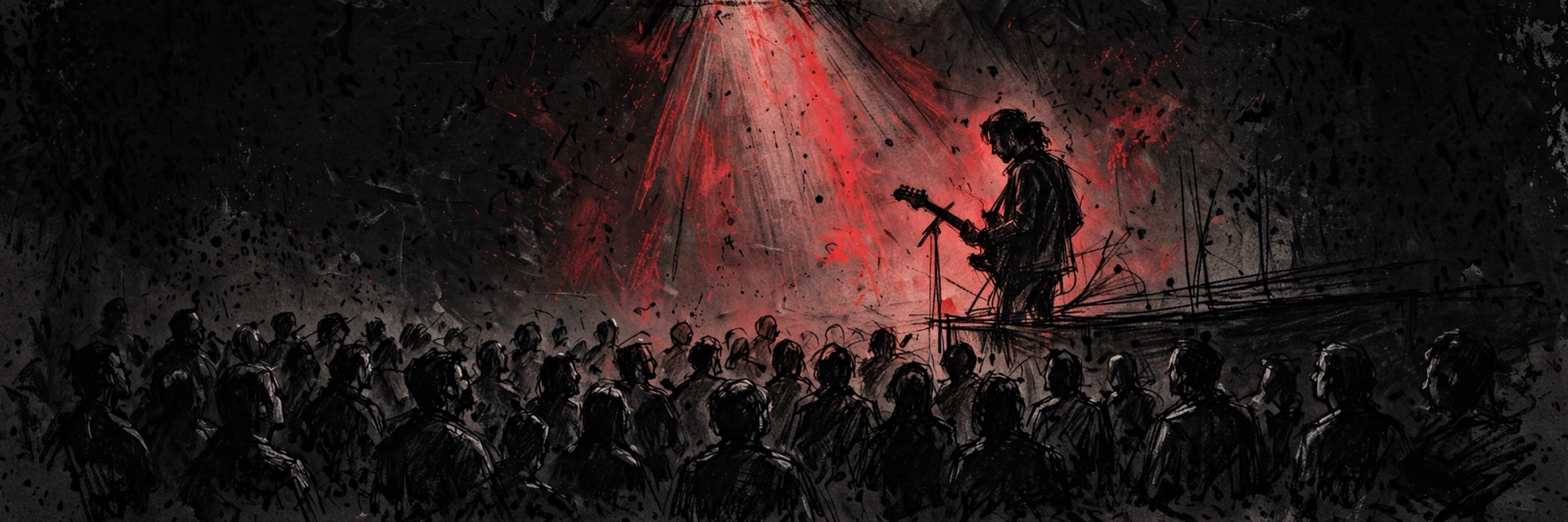
I've been playing guitar in bands longer than I've been doing marketing. Three projects. Countless gigs. Bars, clubs, the occasional room that actually had a sound guy who knew what he was doing.
People want me to draw a neat line between the two — "music taught me marketing!" — and I've always resisted that, because the neat version is usually fake. But there is something real there. Not a metaphor. A skill. And it's the most transferable thing I own.
Reading a room.
When you walk on stage, you have about thirty seconds to figure out the room. Not the setlist — the room. Are they here to listen or here to drink? Is the energy restless or locked in? Did the last band clear the floor or warm it up? You read it in the noise level, the body language, how close people stand to the stage. And then you adjust — not the songs, the delivery. Same material, different room, different show.
Marketing is the same skill with different instruments.
I walk into a company and I do the same thirty-second read. What's the actual energy here — not the deck, the room. Is the CEO bought in or performing buy-in? Does the team trust each other or are they performing trust? Is the "we need more pipeline" the real problem, or is it the thing they say because the real problem is unsayable in a meeting?
The deck tells you what they want you to hear. The room tells you what's true. Musicians learn to trust the room because the room doesn't lie — a crowd that's bored will show you bored even while they're clapping.
---
Timing.
In a band, timing isn't about speed. It's about knowing when to play and when to shut up. The best musicians I know aren't the flashiest — they're the ones with the best sense of space. They know the note you don't play is doing as much work as the one you do.
I run meetings the same way now. I used to fill silence with talking — explaining, justifying, performing competence. The stage taught me that silence is information. When I say something true in a meeting and the room goes quiet, that's not failure. That's the note landing. Don't step on it by explaining further.
And in writing, in positioning, in messaging — restraint is the whole game. The companies that try to say everything say nothing. The ones that leave space let the important thing land. Every great solo I've ever heard was great because of what surrounded the notes, not the notes themselves.
---
Rehearsal versus performance.
Here's the part nobody talks about. The gig is the easy part. The gig is just the performance of work you already did alone in a room for hundreds of hours.
Nobody sees the reps. The scales. The same passage played forty times until the fingers know it without the brain. By the time you're on stage, you're not thinking — you're executing something that's been burned in.
The marketing equivalent: the operator who looks effortless in a crisis has done the reps. They've seen the pattern before. The "instinct" is just compressed experience. When I diagnose a company's problem in the first meeting, it's not genius — it's the forty-times repetition. I've seen the same failure modes in enough companies that the recognition is automatic now.
People want the performance without the rehearsal. They want the insight without the reps. Doesn't work that way. Not on stage, not in business.
---
The session guy's discipline.
I've done session work — hired to come in, play the part, leave. No glory. Nobody knows your name on the record. And it's the most disciplined work in music, because the job isn't self-expression. The job is serving the song.
That's the fractional CMO job, by the way. You're the session guy. You come in, you play the part the song needs — not the part that shows off your chops — and you leave the track better than you found it. The companies that want a session player and get someone soloing over everything are the engagements that fail. Know which chair you're sitting in.
---
What it actually gave me.
Not metaphors. Not "music is like marketing." Something more practical: a nervous system trained to read live feedback in real time and adjust without panic.
A crowd going quiet mid-set doesn't mean the show's over. It means something shifted and you need to respond — change the energy, talk to them, play the song that brings them back. Same in business. The pipeline dipping doesn't mean the company's dying. It means something shifted. Read it. Respond. Don't panic.
That's what twenty years of stages gave me. Not inspiration. Reflexes.
A note from the author
Thanks for reading. If this sparked something — a question, a disagreement, a project idea — I want to hear it.
The fastest way to reach me is steve@stevepeeleii.com, or say hello through the contact page.
— Steve Peele II